Solar vs generator: Which power solution delivers better value for Nigerian homes and businesses?
Solar vs Generator Cost Comparison Nigeria 2026: Which Saves You More Money?
Introduction: Every Nigerian homeowner and business owner faces the same question: should I invest in solar or stick with my generator? With diesel averaging ₦1,250/litre, petrol fluctuating around ₦700/litre, and solar panel prices dropping 15-20% since 2024, the solar vs generator cost comparison has never been more compelling. This comprehensive 2026 guide from Titanium Power Solutions breaks down the real costs—initial investment, annual operating expenses, and 10-year total ownership—to help you make the smartest financial decision for your Nigerian home or business. Whether you’re powering a Lekki duplex or an Ikeja office, discover which solution delivers more value for your money.
✅ Not Sure Which Is Right for You?
📞 Call/WhatsApp: +2349067441287 | 📧 Email: info@titaniumpowersolutions.com
Get a free personalized cost comparison from our experts—we’ll analyze your specific power needs and recommend the optimal solution.
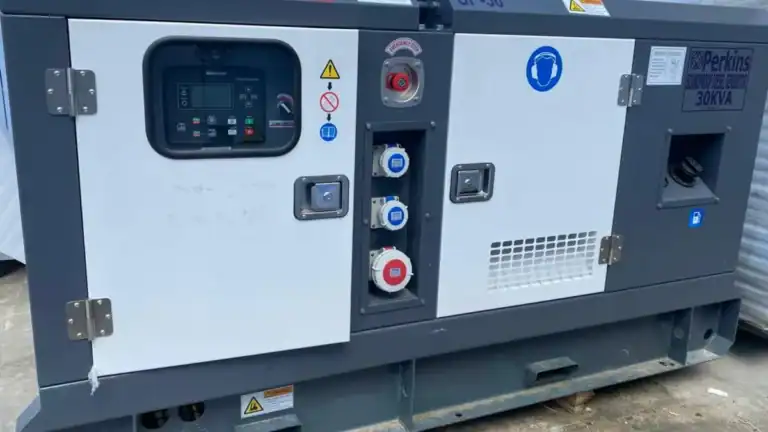
🔥 2026 MARKET INSIGHT: Nigeria installed 803 MW of new solar capacity in 2025—a 141% increase from 2024. With fuel subsidy removal making generators more expensive to run, more Nigerians are asking: solar vs generator—which is cheaper? View our hybrid-ready Perkins generator →
Why the Solar vs Generator Debate Matters More in 2026
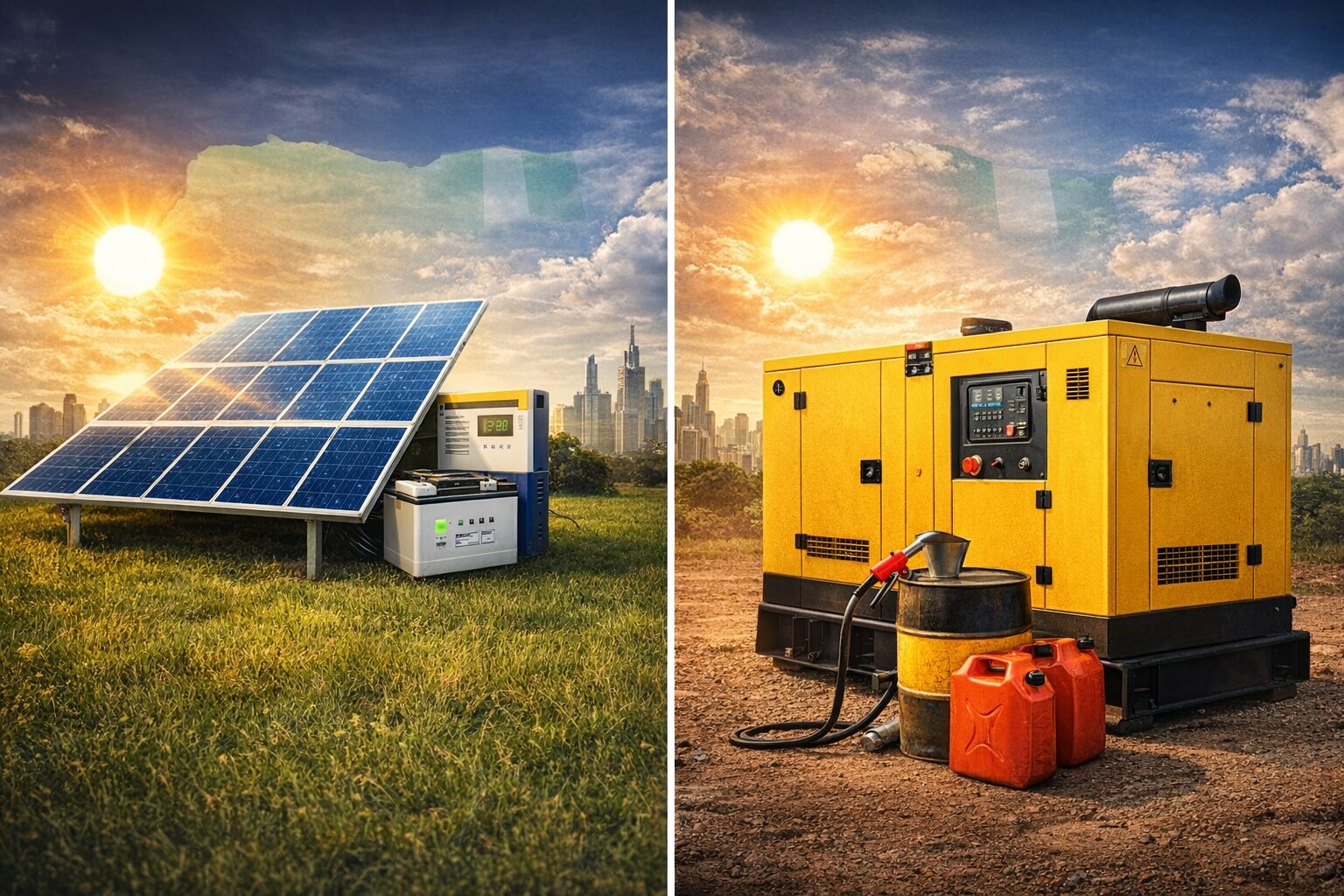
The right choice depends on your usage pattern and location
For years, Nigerian homes and businesses had one reliable backup power option: generators. But 2026 is different. The removal of fuel subsidies has made running petrol and diesel generators significantly more expensive. Meanwhile, solar component prices continue to fall, and battery technology has improved dramatically. The result? For many Nigerian users, solar is now the more economical choice over a 5-10 year horizon.
👉 START HERE: Before comparing costs, ensure you understand your power needs. Read our Complete Generator Sizing Guide to calculate your actual load.
📊 KEY 2026 FACT: 100% of surveyed Nigerian customers expressed interest in clean energy alternatives. However, 85% cited high upfront costs as the primary barrier. This guide helps you understand the true long-term value.
Understanding the Real Cost of Generator Ownership in Nigeria
Before comparing solar vs generator, let’s establish baseline costs for generator ownership. We’ll use a typical 5kVA generator—the most common size for Nigerian homes and small businesses.
Generator Cost Breakdown (5kVA Petrol vs Diesel)
| Cost Factor | Petrol Generator | Diesel Generator |
|---|---|---|
| Initial Purchase Price | ₦650,000 – ₦950,000 | ₦1,500,000 – ₦2,200,000 |
| Fuel Consumption (per hour at 75% load) | 3.2 – 3.8 litres/hour | 2.0 – 2.5 litres/hour |
| Fuel Price (2026 average) | ₦700/litre | ₦1,250/litre |
| Fuel Cost per Hour | ₦2,240 – ₦2,660 | ₦2,500 – ₦3,125 |
| Daily Fuel Cost (8 hours) | ₦17,920 – ₦21,280 | ₦20,000 – ₦25,000 |
| Monthly Fuel Cost (20 days) | ₦358,400 – ₦425,600 | ₦400,000 – ₦500,000 |
| Annual Fuel Cost | ₦4,300,800 – ₦5,107,200 | ₦4,800,000 – ₦6,000,000 |
| Annual Maintenance | ₦50,000 – ₦100,000 | ₦80,000 – ₦150,000 |
| Expected Lifespan | 3,000 – 5,000 hours (2-3 years) | 8,000 – 12,000 hours (5-8 years) |
| 10-Year Total Cost of Ownership | ₦45,000,000 – ₦55,000,000 | ₦40,000,000 – ₦48,000,000 |
💰 GENERATOR COST INSIGHT: A 5kVA diesel generator costs ₦40-48 million over 10 years. A petrol generator costs ₦45-55 million. Fuel alone represents 80-90% of total ownership cost.
Understanding the Real Cost of Solar Installation in Nigeria
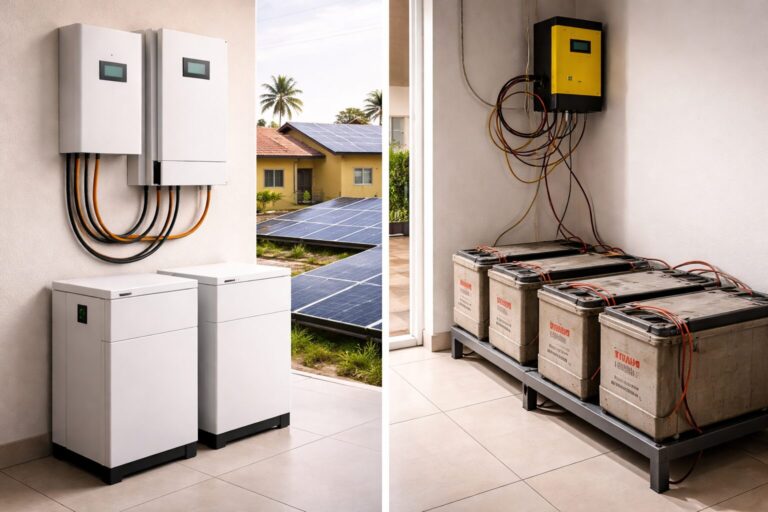
Solar systems require higher upfront investment but have minimal ongoing costs. Here’s the breakdown for typical Nigerian installations:
Solar System Cost Breakdown by Size
| System Size | What It Powers | Initial Cost | Annual Maintenance | Expected Lifespan |
|---|---|---|---|---|
| 1.5kVA Solar System | Lights, fans, TV, phone charging (small apartment) | ₦800,000 – ₦1,200,000 | ₦20,000 – ₦40,000 | 10-15 years (panels), 3-5 years (batteries) |
| 3kVA Solar System | Lights, fans, TV, fridge, small AC, laptop (3-bedroom flat) | ₦1,800,000 – ₦2,800,000 | ₦30,000 – ₦60,000 | 10-15 years (panels), 3-5 years (batteries) |
| 5kVA Solar System | Full home: multiple ACs, fridge, freezer, water pump, home office (5-bedroom duplex) | ₦3,500,000 – ₦5,500,000 | ₦50,000 – ₦100,000 | 10-15 years (panels), 5-8 years (lithium batteries) |
| 10kVA Solar System | Small business, office, large home (commercial) | ₦7,000,000 – ₦12,000,000 | ₦80,000 – ₦150,000 | 10-15 years (panels), 5-8 years (lithium batteries) |
Solar System Component Breakdown:
- Solar Panels: ₦45,000 – ₦250,000 per panel (depending on wattage and brand)
- Solar Inverter: ₦450,000 – ₦1,400,000 (3-5kVA models)
- Lithium Batteries: ₦1,200,000 – ₦6,000,000 (depending on capacity)
- Lead-Acid Batteries: ₦85,000 – ₦420,000 (more affordable but shorter lifespan)
- Installation & Accessories: ₦300,000 – ₦800,000
🔋 SOLAR COMPONENT GUIDE: Read our Complete Guide to Solar Batteries to choose the right storage for your needs.
Solar vs Generator: 10-Year Total Cost Comparison
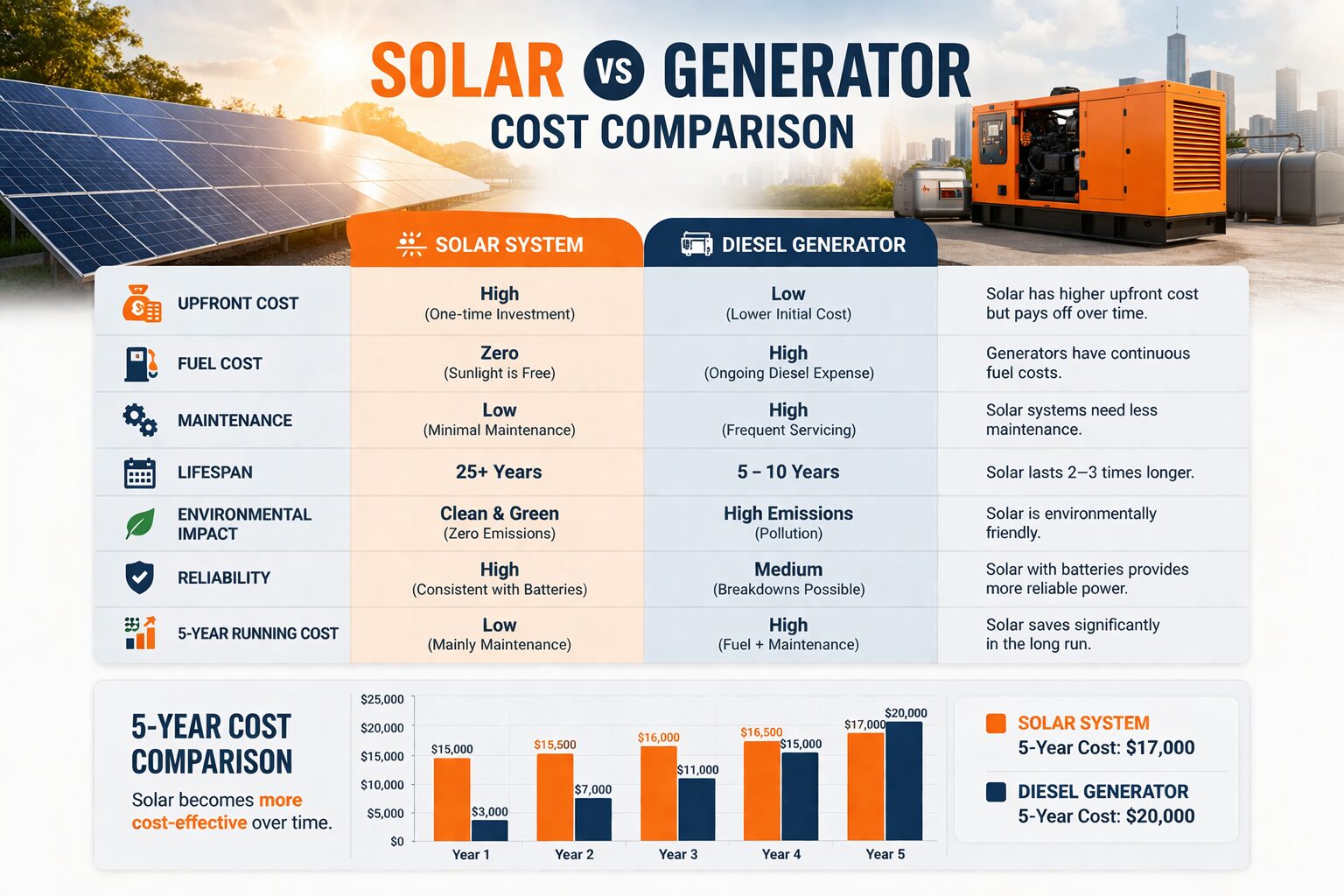
Solar wins long-term, but generator wins on upfront cost
Let’s compare the 10-year total cost of ownership for a typical Nigerian home requiring 5kVA power (5-bedroom duplex with multiple ACs, fridge, water pump).
Scenario A: 5kVA Diesel Generator (Daily 8-hour runtime)
- Initial Cost: ₦1,800,000
- Annual Fuel Cost: 2.2 L/hr × 8 hrs × 20 days × 12 months × ₦1,250 = ₦5,280,000/year
- 10-Year Fuel Cost: ₦52,800,000
- Annual Maintenance: ₦100,000 × 10 = ₦1,000,000
- Replacement (generator lifespan 8,000 hours = 4-5 years): 2 replacements × ₦1,800,000 = ₦3,600,000
- 10-Year Total Cost: ₦59,200,000
Scenario B: 5kVA Solar System (with Lithium Batteries)
- Initial Cost: ₦4,500,000 (complete system with lithium batteries)
- Annual Fuel Cost: ₦0 (sunlight is free!)
- Annual Maintenance: ₦70,000 × 10 = ₦700,000
- Battery Replacement (lithium lasts 5-8 years): 1 replacement × ₦2,500,000 = ₦2,500,000
- Inverter Replacement (if needed): ₦800,000 (once in 10 years)
- 10-Year Total Cost: ₦8,500,000
Scenario C: Hybrid Solar-Generator System (Best of Both Worlds)
- Initial Cost: 3kVA solar system (₦2,500,000) + backup generator (₦1,200,000) = ₦3,700,000
- Annual Fuel Cost: 50% reduction (only when solar insufficient) = ₦2,640,000/year
- 10-Year Fuel Cost: ₦26,400,000
- Annual Maintenance: Solar (₦40,000) + Generator (₦60,000) = ₦100,000/year = ₦1,000,000
- Battery Replacement: ₦1,500,000
- Generator Replacement: ₦1,200,000
- 10-Year Total Cost: ₦33,800,000
10-Year Cost Comparison Summary:
Diesel Generator Only: ₦59,200,000
Solar Only (with Lithium): ₦8,500,000
Hybrid Solar-Generator: ₦33,800,000
Potential Savings with Solar vs Diesel Generator: ₦50,700,000 over 10 years!
💡 THE VERDICT: For Nigerian users with daily power needs, solar is significantly cheaper than generator over 10 years—saving ₦50+ million. However, the higher upfront cost remains the biggest barrier.
Hybrid Solar-Generator Systems: The Smart Nigerian Solution
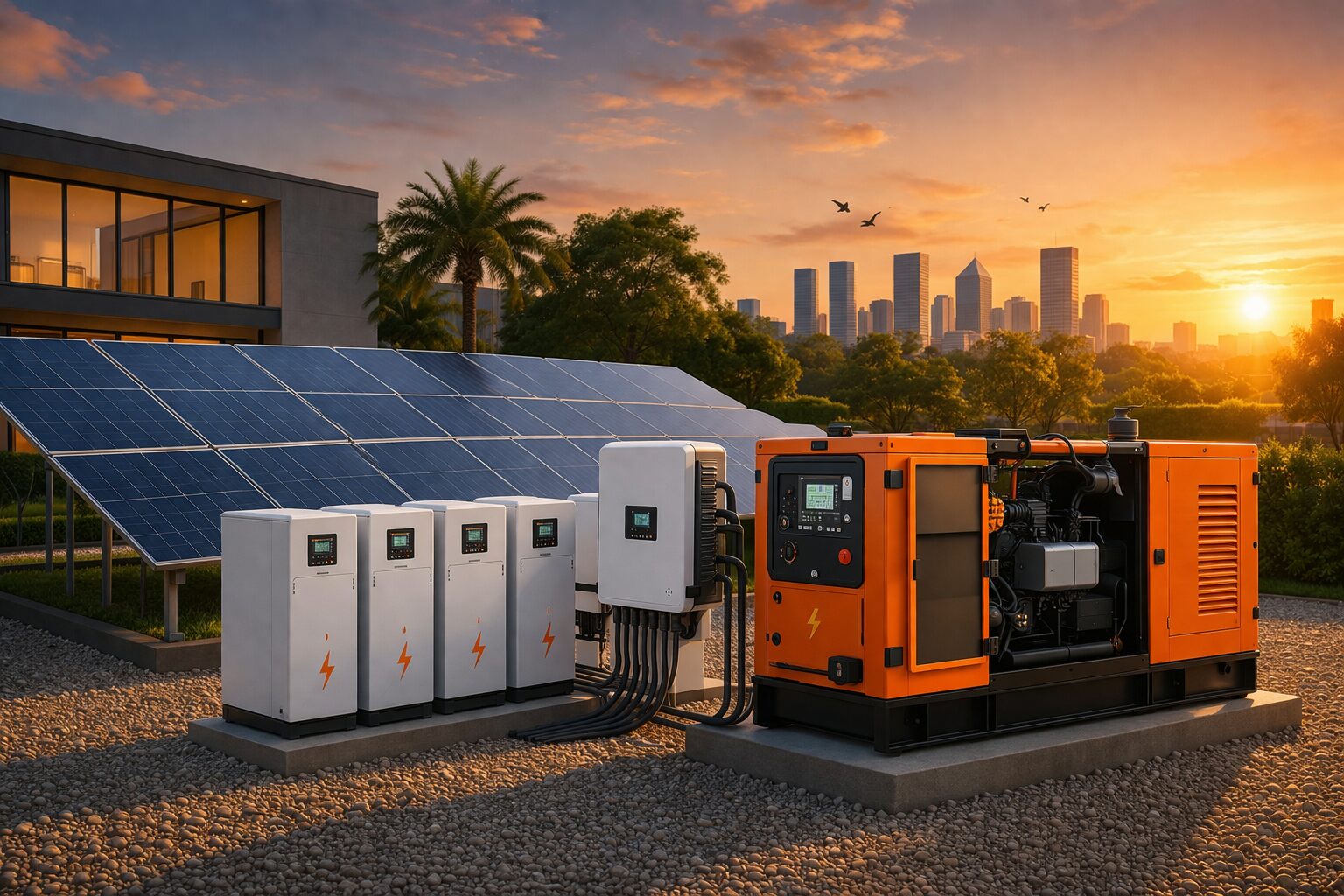
Hybrid systems combine solar savings with generator reliability
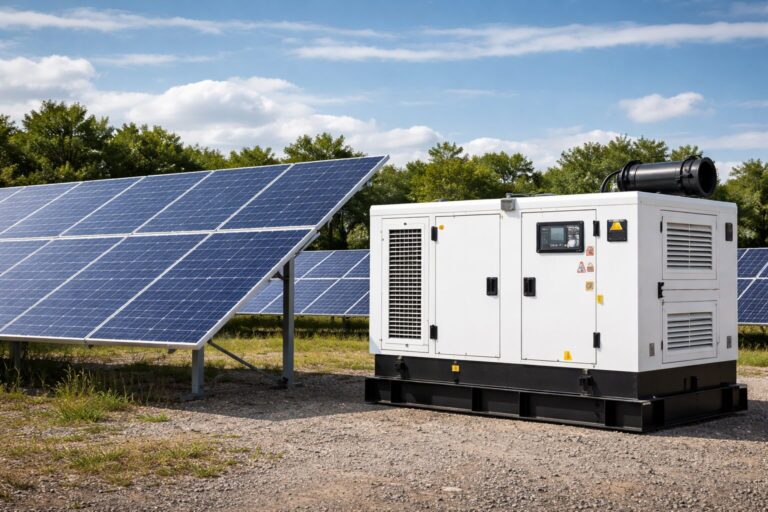
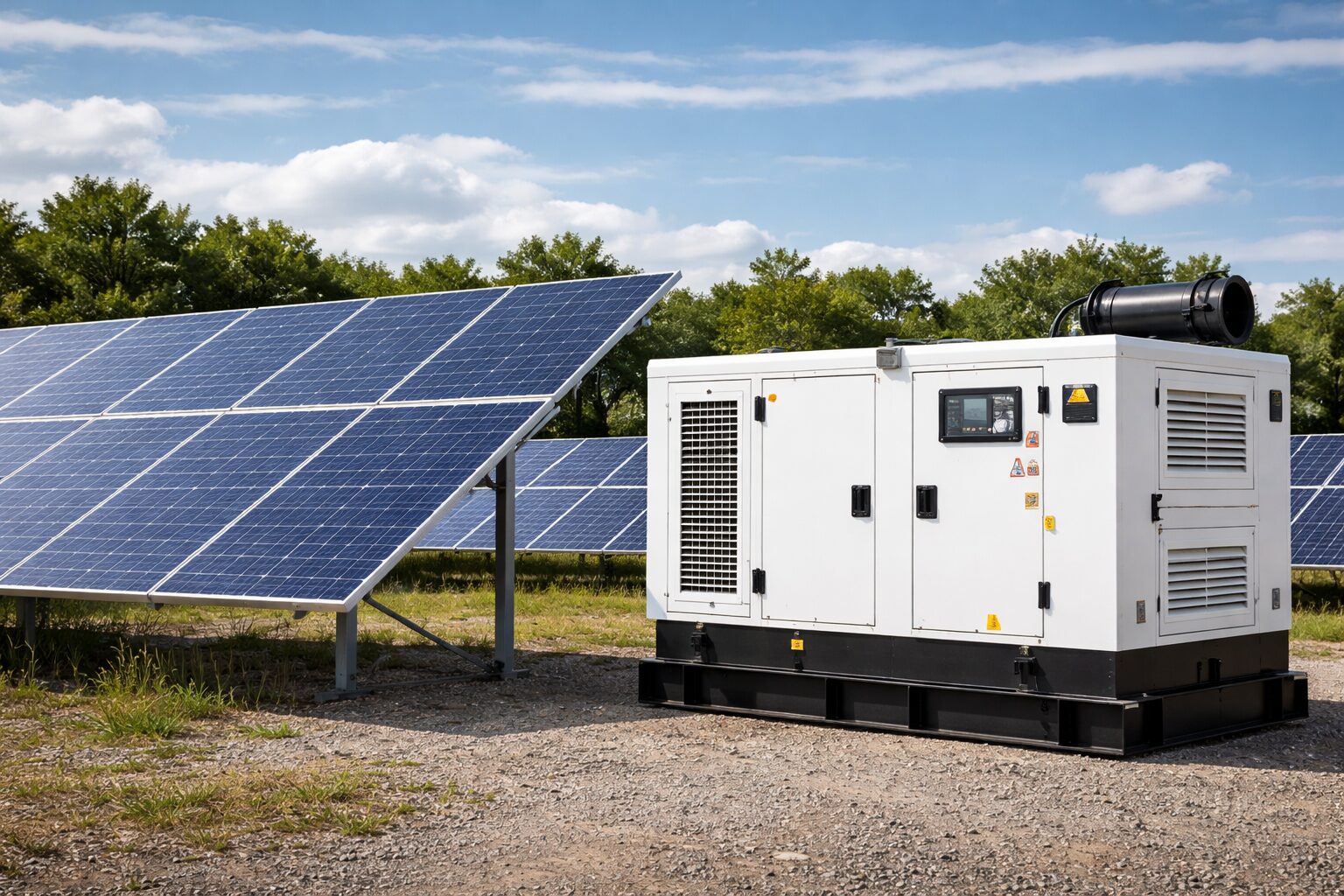
The hybrid approach is gaining massive traction in Nigeria. It combines the low operating cost of solar with the reliability of generator backup. Here’s why it works:
How Hybrid Systems Work:
- Daytime: Solar panels power your home; excess charges batteries
- Evening/Night: Batteries power essential loads (lights, fans, fridge)
- Generator-Only Periods: Generator runs only during extended outages or when batteries are depleted
- Result: Generator runtime reduced by 50-70%, cutting fuel costs dramatically
Recommended Hybrid Configurations:
| Property Type | Recommended Hybrid Setup | Estimated Cost | Generator Runtime Reduction |
|---|---|---|---|
| 3-Bedroom Flat | 3kVA solar + 5kVA generator | ₦2,800,000 – ₦3,500,000 | 60-70% |
| 5-Bedroom Duplex | 5kVA solar + 10kVA generator | ₦4,500,000 – ₦6,000,000 | 50-60% |
| Small Business/Office | 8kVA solar + 15kVA generator | ₦8,000,000 – ₦12,000,000 | 60-70% |
⚡ HYBRID READY GENERATORS: Our Perkins diesel generators are designed for hybrid integration with solar systems.
Real Case Study: Lagos Homeowner Saves ₦4.2M Annually with Solar
Case Study: Family Home in Lekki Phase 1, Lagos
Client: 5-bedroom duplex with 3 ACs, full kitchen, home office, water pump
Previous Setup: 10kVA petrol generator running 16 hours daily
Before Solar (2024-2025):
- Generator runtime: 16 hours/day, 25 days/month
- Fuel consumption: 5 litres/hour × 16 hrs × 25 days = 2,000 litres/month
- Monthly fuel cost: 2,000 L × ₦700 = ₦1,400,000
- Annual fuel cost: ₦16,800,000
- Maintenance: ₦120,000/year
- Generator lifespan: 2-3 years before major repairs
2026 Hybrid Solution Installed:
- 5kVA solar system with 10kWh lithium battery storage
- 8kVA diesel generator (reduced from 10kVA petrol)
- Automatic transfer switch with solar priority
Results:
- Generator runtime reduced: From 16 hours to 4-5 hours daily (70% reduction)
- Monthly fuel consumption: 600 litres (vs 2,000 litres previously)
- Monthly fuel cost: 600 L × ₦1,250 = ₦750,000
- Annual fuel savings: ₦9,600,000 – ₦9,000,000 = ₦8,600,000 savings
- System ROI: ₦4.5 million system paid for itself in 6 months
- 10-Year Projected Savings: ₦65+ million
📊 THE RESULT: This Lekki homeowner now saves ₦8.6 million annually—enough to buy a new generator every year! Get your free solar assessment today →
Pros and Cons: Solar vs Generator Side-by-Side
| Factor | Solar System | Generator (Diesel/Petrol) |
|---|---|---|
| Upfront Cost | Higher (₦1.5M – ₦12M) | Lower (₦300K – ₦5M) |
| Operating Cost | Very low (sunlight is free) | Very high (fuel is 80-90% of cost) |
| 10-Year Total Cost | ₦8.5M – ₦15M | ₦40M – ₦60M |
| Noise Level | Silent (no noise) | Loud (60-95dB) |
| Maintenance | Minimal (panel cleaning, battery checks) | Frequent (oil, filters, engine service) |
| Reliability | Dependent on sunlight (batteries needed for night) | Reliable if fuel is available |
| Fuel Availability | Not applicable (uses sunlight) | Subject to scarcity, price fluctuations |
| Environmental Impact | Zero emissions, clean energy | High emissions, noise pollution |
| Property Value | Increases property value | Neutral impact |
| Lifespan | Panels 20-25 years, batteries 5-8 years | 3-8 years depending on usage and maintenance |
Which Should You Choose? Decision Guide
Choose Solar (or Solar-Hybrid) If:
- ✅ You have reliable sunlight during the day
- ✅ You plan to stay in your property long-term (5+ years)
- ✅ You can afford higher upfront investment
- ✅ You want to eliminate fuel costs and noise
- ✅ You’re tired of fuel scarcity and price fluctuations
- ✅ You want to increase your property value
- ✅ You run a business with predictable daytime power needs
- ✅ You’re a diaspora property owner wanting remote management
Choose Generator Only If:
- ✅ You have very limited upfront capital
- ✅ You need portable power for multiple locations
- ✅ Your power needs are highly variable or unpredictable
- ✅ You don’t plan to stay in the property long-term
- ✅ You have consistent, affordable fuel access
- ✅ Your property has poor sunlight exposure (shaded, limited roof space)
Choose Hybrid (Solar + Generator) If:
- ✅ You want the best of both worlds
- ✅ You have moderate upfront capital
- ✅ You want to reduce fuel costs significantly (50-70%)
- ✅ You need 100% reliability regardless of weather
- ✅ You want to start with solar now and add more later
- ✅ You’re in a location with occasional cloudy days
🎯 QUICK DECISION: For most Nigerian homeowners and businesses, the hybrid solar-generator system offers the perfect balance—lower operating costs with guaranteed reliability.
Special Section: For Nigerians Living Abroad (Diaspora Buyers)
🌍 Are you a Nigerian living abroad, investing in property back home? Your choice between solar and generator has long-term financial implications for your property’s value and ongoing costs.
Why Solar is Ideal for Diaspora Properties:
- Set-and-Forget: Solar requires minimal ongoing management—no fuel purchases to coordinate with tenants
- No Fuel Scarcity Issues: Your tenants won’t call you during fuel scarcity crises
- Higher Rent Potential: Properties with solar command premium rents (15-25% higher)
- Remote Monitoring: Modern solar systems with app monitoring let you check performance from anywhere
- Noise-Free: No neighbour complaints to manage remotely
- Tax Benefits: Solar installations may qualify for green energy incentives
“I’m in the UK and own three properties in Lagos. Titanium Power installed solar on all of them. My tenants love the lower electricity bills, and I don’t worry about fuel anymore. Best investment I’ve made in my properties!”
— Mr. Adebayo, London (Properties in Lekki, Ikeja, and Victoria Island)
🌍 DIASPORA SOLAR SOLUTIONS: Get a free solar proposal for your Nigerian property → We handle everything remotely.
Solar Financing Options in Nigeria
The biggest barrier to solar adoption is upfront cost. Here are financing options available in 2026:
- Pay-As-You-Go Solar: Some providers offer installment payment plans over 6-24 months
- Solar Loans: Select Nigerian banks now offer green energy loans
- Equipment Leasing: Pay monthly for the system, own it after lease term
- Phased Installation: Start with solar + grid, add batteries later, then generator
- Property Value Financing: Solar increases property value—some use this equity
💰 FINANCING OPTIONS: We can help you explore available solar financing solutions. Contact us to discuss payment plans →
Why Choose Titanium Power Solutions?
- Complete Energy Solutions: We offer solar, generators, and hybrid systems—unbiased recommendations
- Quality Components: Only tier-1 solar panels, premium inverters, and genuine Perkins generators
- Expert Design: Custom systems sized for your specific needs
- Professional Installation: Certified technicians ensure optimal performance
- Nationwide Service: Installation and support across Nigeria
- Diaspora Support: Complete remote solution for property owners abroad
- Maintenance Plans: Ongoing support to protect your investment
✅ Ready to Make the Switch to Solar?
Get a free solar vs generator cost comparison for your home or business