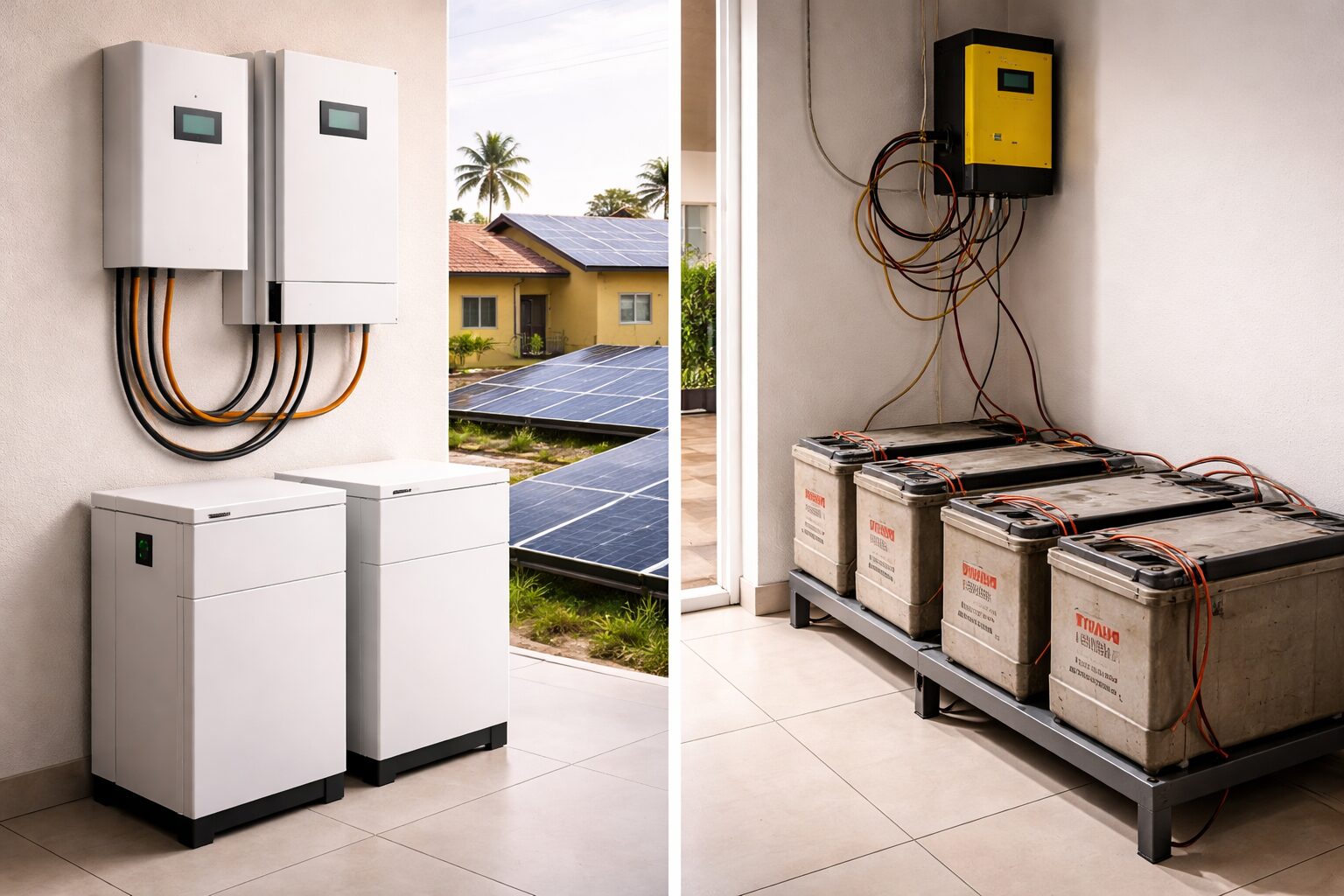
Lithium vs Lead Acid Solar Batteries: Choosing the right solar battery is critical for system performance and long-term savings
Introduction: If you’re investing in solar power for your Nigerian home or business, choosing the right battery is one of the most critical decisions you’ll make. The battery is often the most expensive component of your solar system—and the one that determines how long your system will last when the sun goes down. In 2026, Nigerian solar buyers face a choice: affordable but shorter-lived lead acid batteries, or premium lithium batteries with longer lifespan and better performance. This comprehensive guide from Titanium Power Solutions breaks down everything you need to know about lithium vs lead acid solar batteries—costs, lifespan, performance, and which option delivers better value for Nigerian conditions.
📞 Call/WhatsApp: +2349067441287 | 📧 Email: info@titaniumpowersolutions.com
Get a free battery consultation—we’ll help you choose the optimal battery for your needs and budget.
🔥 2026 BATTERY INSIGHT: Lithium battery prices have dropped 30-40% since 2022, making them more accessible than ever. Meanwhile, lead acid batteries face rising costs and shorter lifespans in Nigerian conditions. View our complete solar battery range →

The battery determines how long your solar system powers your home
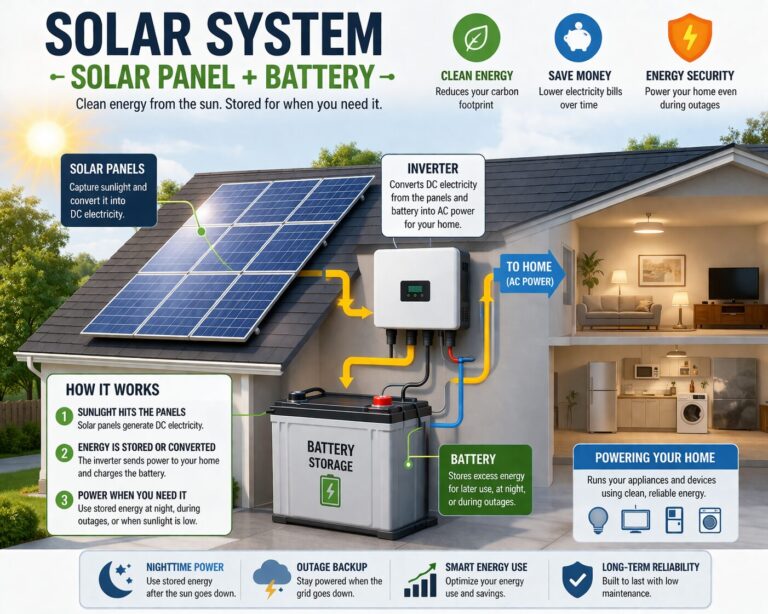
Your solar battery is the heart of your energy storage system. Without it, your solar panels only work when the sun is shining. With the right battery, you can power your Nigerian home or business through the night, during cloudy days, and even through extended grid outages. But not all batteries are created equal—especially in Nigeria’s demanding environment.
👉 START HERE: Before choosing a battery, ensure you’ve sized your solar system correctly. Read our Complete Solar System Sizing Guide to calculate your actual needs.
📊 NIGERIAN REALITY: Temperatures regularly exceed 35°C, grid power is unreliable, and many properties experience frequent voltage fluctuations. Your battery choice must withstand these conditions.
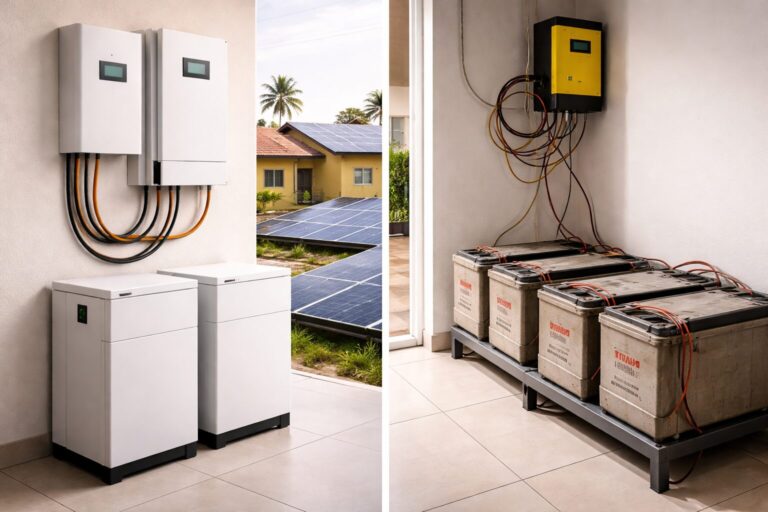
Lead acid batteries have been used for decades. They’re the technology in your car battery—proven, affordable, and widely available. There are two main types used in solar:
Lithium batteries (specifically Lithium Iron Phosphate or LiFePO4) represent the latest battery technology. They’re lighter, last longer, and perform better—but cost more upfront. In 2026, they’re rapidly becoming the preferred choice for Nigerian solar installations.
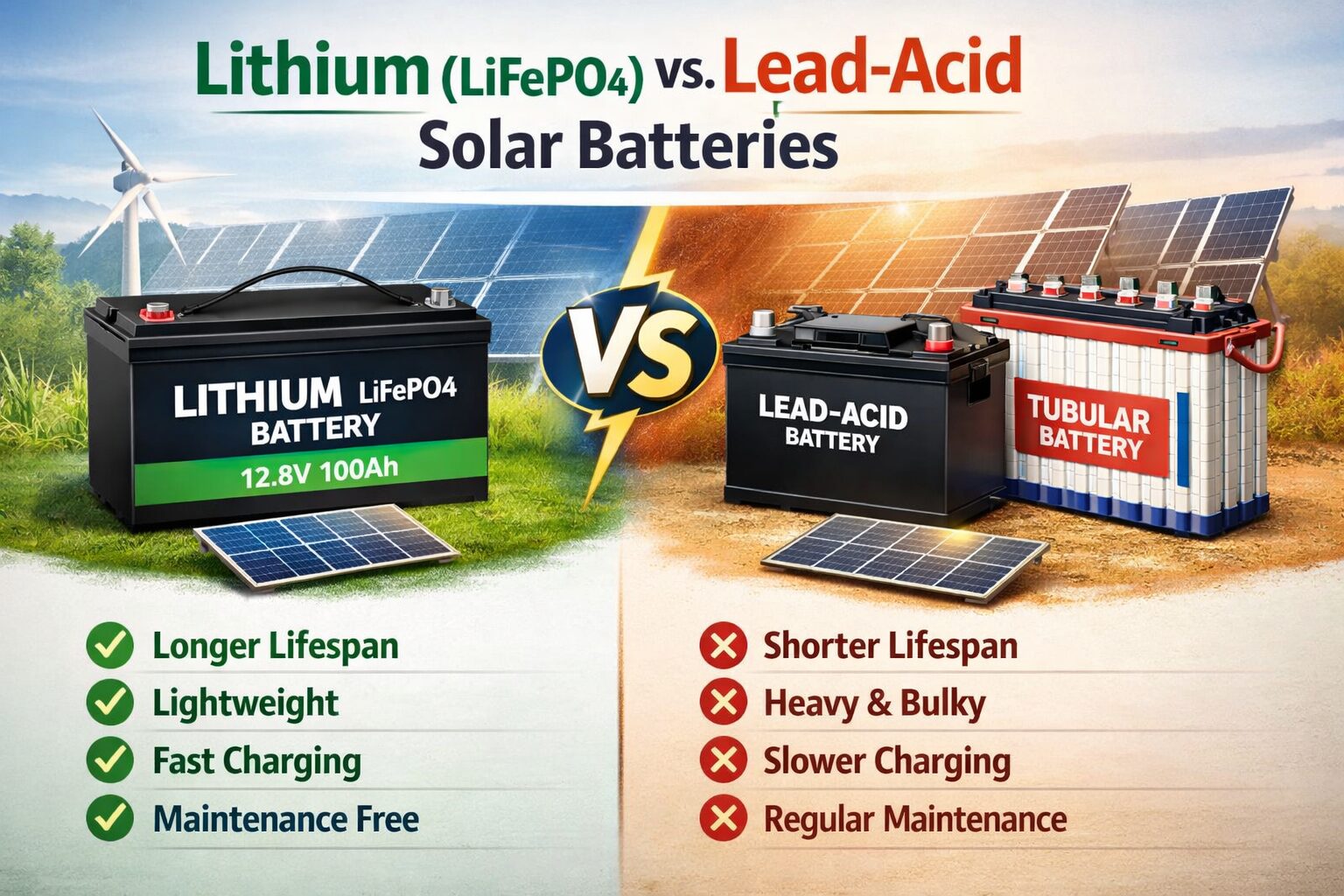
Lithium vs lead acid: Which battery technology suits your needs?
| Factor | Lead Acid Battery | Lithium Battery (LiFePO4) | Winner |
|---|---|---|---|
| Upfront Cost (per kWh) | ₦85,000 – ₦150,000 | ₦350,000 – ₦600,000 | ✅ Lead Acid |
| Lifespan (Cycles) | 300 – 1,200 cycles | 3,000 – 6,000 cycles | ✅ Lithium (5-10× longer) |
| Depth of Discharge (usable capacity) | 50% (only half usable) | 80-100% (almost fully usable) | ✅ Lithium |
| Energy Density (size/weight) | Heavy and bulky | 50-70% lighter, compact | ✅ Lithium |
| Maintenance | Regular water top-up (FLA), cleaning | Zero maintenance | ✅ Lithium |
| Nigerian Heat Tolerance | Moderate (sensitive to high temps) | Excellent (built-in thermal management) | ✅ Lithium |
| Installation Flexibility | Must be upright, ventilated | Any position, indoor or outdoor | ✅ Lithium |
| Efficiency (round-trip) | 70-85% | 95-98% | ✅ Lithium (less energy loss) |
| Warranty | 1-2 years | 5-10 years | ✅ Lithium |
| 10-Year Total Cost (5kWh system) | ₦850,000 – ₦1,500,000 | ₦2,500,000 – ₦4,000,000 | ✅ Lithium (long-term value) |
💡 KEY INSIGHT: While lithium batteries cost 3-4× more upfront, they last 5-10× longer and offer better performance. Over 10 years, lithium often delivers better value per naira spent—especially for daily-use systems.
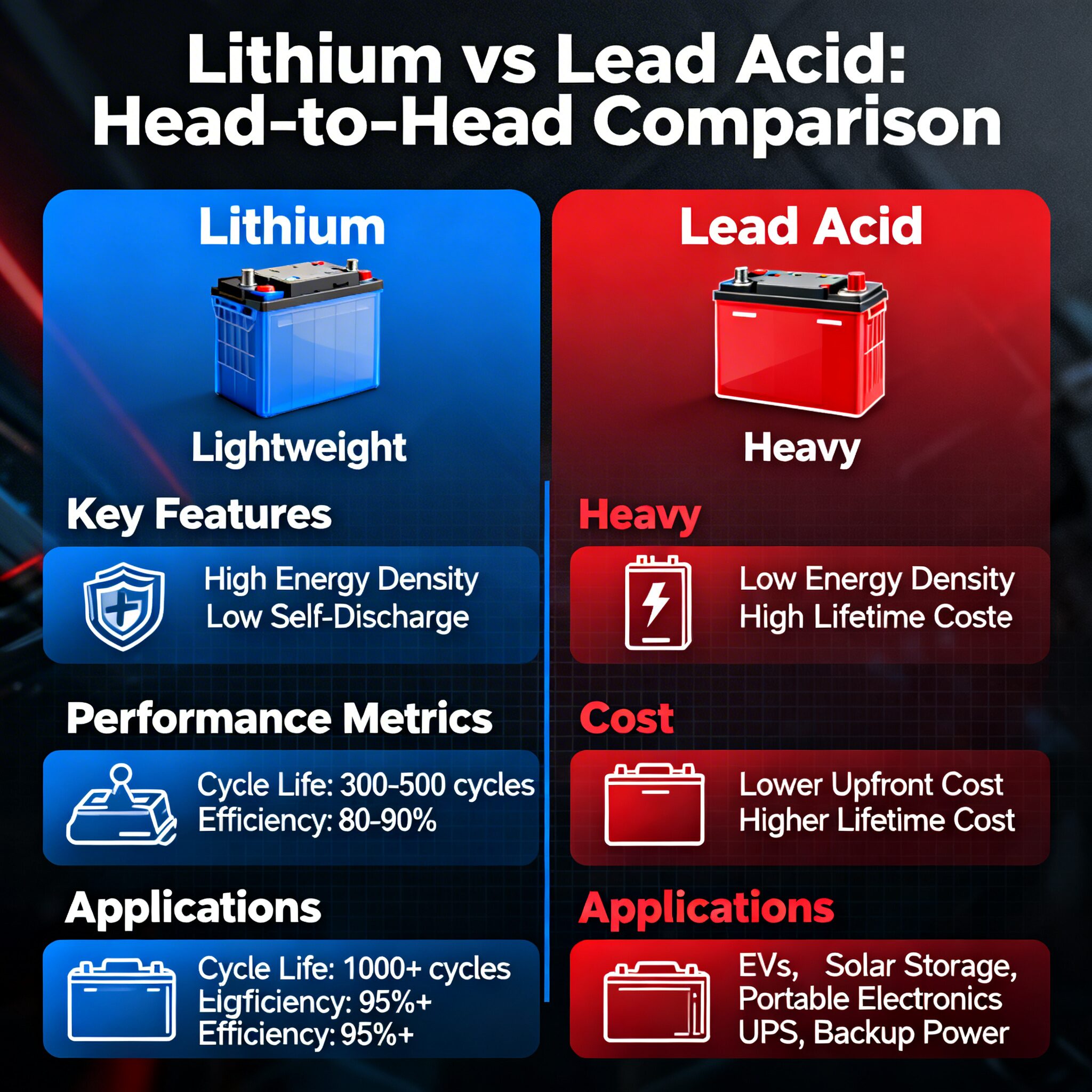
Lithium batteries last 5-10× longer than lead acid
Let’s look at the real cost of ownership for a typical Nigerian solar system requiring 5kWh of usable storage (enough to power lights, fans, TV, fridge through the night).
Lead Acid: ₦3,000,000 – ₦4,000,000
Lithium: ₦2,500,000 – ₦3,500,000
Winner: Lithium saves ₦500,000 – ₦1,000,000 over 10 years
Plus you get better performance, zero maintenance, and no downtime.
💰 LONG-TERM VALUE: Despite higher upfront cost, lithium batteries often deliver better value over 10+ years—especially when you factor in Nigerian conditions that shorten lead acid lifespan.
Nigerian temperatures regularly exceed 35°C. Heat is the enemy of batteries:
This is critical—it determines how much usable power you get from your battery bank:
With frequent grid outages, fast charging matters:
Nigerian realities make maintenance a challenge:
🔋 NIGERIAN ADVANTAGE: Lithium batteries are ideal for Nigeria’s unreliable grid—they charge faster when power is available, last longer in high temperatures, and require no maintenance. View our lithium battery range →
| Safety Factor | Lead Acid | Lithium |
|---|---|---|
| Thermal Runaway Risk | Low (but can overheat) | LiFePO4 chemistry is extremely stable; thermal runaway risk is near zero |
| Gas Emission | Hydrogen gas during charging—requires ventilation, risk of explosion | Zero gas emission—can be installed indoors safely |
| Acid Leakage | Sulfuric acid can leak if damaged—corrosive and dangerous | No acid, no leakage—fully sealed |
| Fire Risk | Low if properly maintained; high if overcharged | Very low; built-in BMS prevents overcharge, over-discharge, short circuits |
| Installation Location | Must be outside or in ventilated battery room | Can be installed indoors, in living spaces, or even in cabinets |
⚠️ SAFETY NOTE: For Nigerian homes with limited space, lithium batteries offer significant safety advantages—no gas emissions, no acid leaks, and safe for indoor installation. Lead acid requires dedicated, ventilated battery rooms.
Client: Family home with 5kVA solar system installed in 2022
📊 THE RESULT: This Lekki homeowner now enjoys double the backup time, zero maintenance, and will save over ₦1.5 million in battery replacement costs over 10 years. Upgrade to lithium today →

Lead acid still has a place in certain applications
🔋 PREMIUM LITHIUM SOLUTIONS: Explore our range of high-quality lithium batteries designed for Nigerian conditions. Warranty up to 10 years.
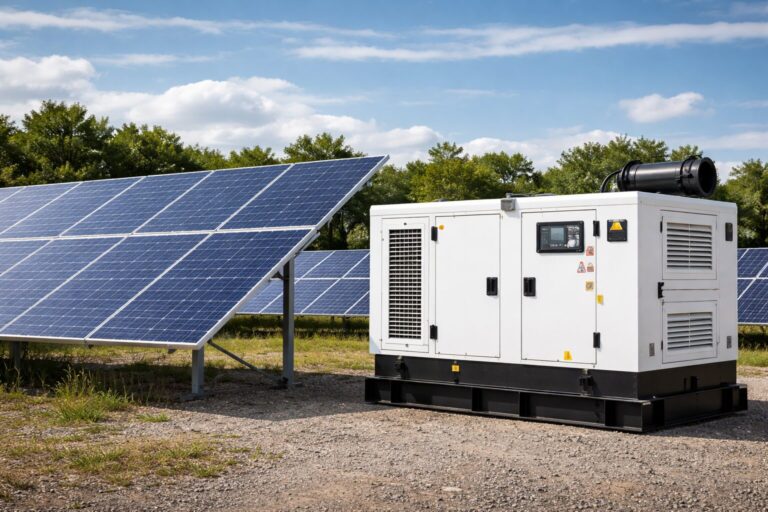
For Nigerians investing in hybrid solar-generator systems, lithium batteries are the clear winner. Here’s why:
⚡ HYBRID SYSTEM TIP: In hybrid solar-generator setups, lithium batteries can reduce generator fuel consumption by an additional 30-40% compared to lead acid—thanks to faster charging and deeper discharge capabilities.
| Brand | Type | Price Range | Warranty | Best For |
|---|---|---|---|---|
| Felicity Solar | Lithium (LiFePO4) | ₦350,000 – ₦1,200,000 per unit | 5-10 years | Popular choice, good value, widely available |
| BYD | Lithium (LiFePO4) | ₦800,000 – ₦2,500,000 per unit | 10 years | Premium, high-quality, longer warranty |
| Pylontech | Lithium (LiFePO4) | ₦500,000 – ₦1,800,000 per unit | 5-7 years | Reliable, stackable, excellent for home systems |
| SunnyTech | Lithium (LiFePO4) | ₦400,000 – ₦1,500,000 per unit | 5 years | Affordable lithium option |
| Optima | Lead Acid (AGM) | ₦85,000 – ₦200,000 per unit | 1-2 years | Premium lead acid, maintenance-free |
| Fiamm | Lead Acid (AGM) | ₦70,000 – ₦150,000 per unit | 1-2 years | Good quality sealed lead acid |
| Powersafe | Lead Acid (AGM) | ₦60,000 – ₦120,000 per unit | 1-2 years | Budget lead acid option |
⚠️ BUYER BEWARE: The Nigerian market has many counterfeit batteries. Always purchase from authorized dealers. Titanium Power Solutions supplies only genuine batteries with full manufacturer warranty.
🌍 Are you a Nigerian living abroad with solar on your Nigerian property? Your battery choice is even more critical—you won’t be on-site to manage maintenance.
“I’m in Canada and own three properties in Lagos. All have lithium batteries installed by Titanium Power. No maintenance, no tenant issues, and I can monitor everything from my phone. Best decision ever!”
— Mrs. Adeola, Toronto (Properties in Lekki, Ikeja, and Victoria Island)
🌍 DIASPORA BATTERY SOLUTIONS: Get a lithium battery proposal for your Nigerian property → Complete remote installation and support available.
A: Quality LiFePO4 lithium batteries last 3,000-6,000 cycles. For daily use (one cycle per day), this is 8-15 years. In Nigerian heat, expect slightly less—still 8-12 years with proper installation and ventilation.
A: No. Never mix battery types or old with new. Different chemistries, voltages, and charging requirements will damage both systems. Replace your entire battery bank at once.
A: Many modern inverters are lithium-compatible. Older inverters may need settings adjusted or replacement. We’ll verify compatibility during installation.
A: Yes. LiFePO4 lithium batteries produce no gas, no acid, and are fully sealed. They can be installed indoors, in closets, or in utility cabinets. Lead acid requires dedicated, ventilated spaces.
A: For daily-use systems, lithium pays for itself within 3-5 years through avoided replacement costs. Over 10 years, lithium saves ₦500,000 – ₦1,500,000 compared to lead acid.
❓ MORE QUESTIONS? Contact our battery experts for personalized advice.
Get a free battery consultation—we’ll help you choose the right lithium or lead acid solution