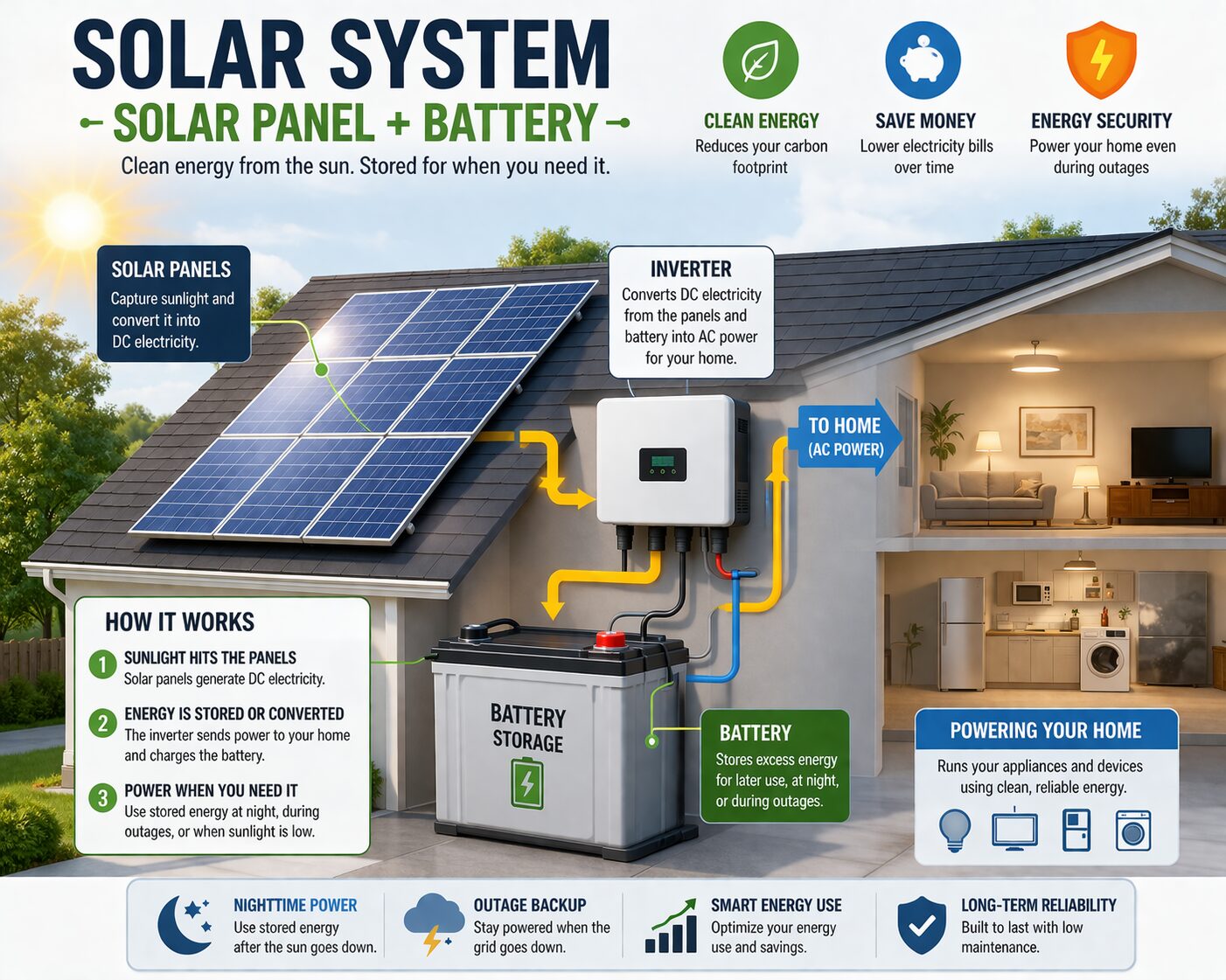
Proper solar system sizing ensures reliable power and maximum return on investment
Introduction: One of the most common questions Nigerian homeowners and business owners ask is: “What size solar system do I need?” The answer isn’t one-size-fits-all. A system that’s too small leaves you in the dark during outages; a system that’s too large wastes your money. This comprehensive 2026 guide from Titanium Power Solutions walks you through the exact process of sizing a solar system for Nigerian conditions—calculating your power needs, determining panel capacity, sizing your battery bank, and selecting the right inverter. Whether you’re powering a 3-bedroom flat in Lagos or a 5-bedroom duplex in Abuja, this guide helps you build a solar system that delivers reliable power without overpaying.
📞 Call/WhatsApp: +2349067441287 | 📧 Email: info@titaniumpowersolutions.com
Get a free solar system sizing consultation from our experts—we’ll design the perfect system for your needs and budget.
🔥 2026 SOLAR INSIGHT: Nigeria’s solar capacity grew by 141% in 2025 to 803 MW. With component prices dropping 15-20%, 2026 is the perfect year to size and install your solar system. View our solar battery range →
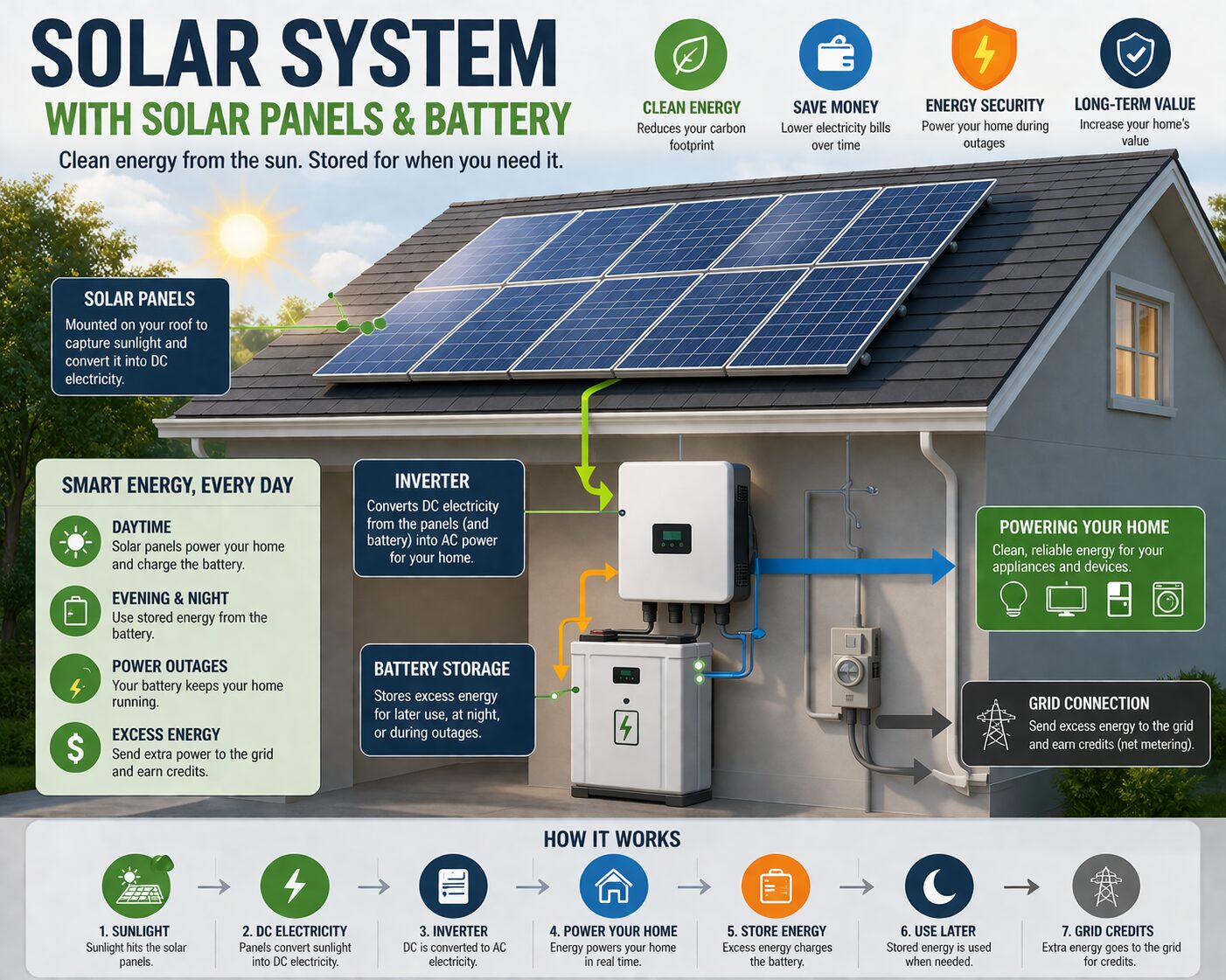
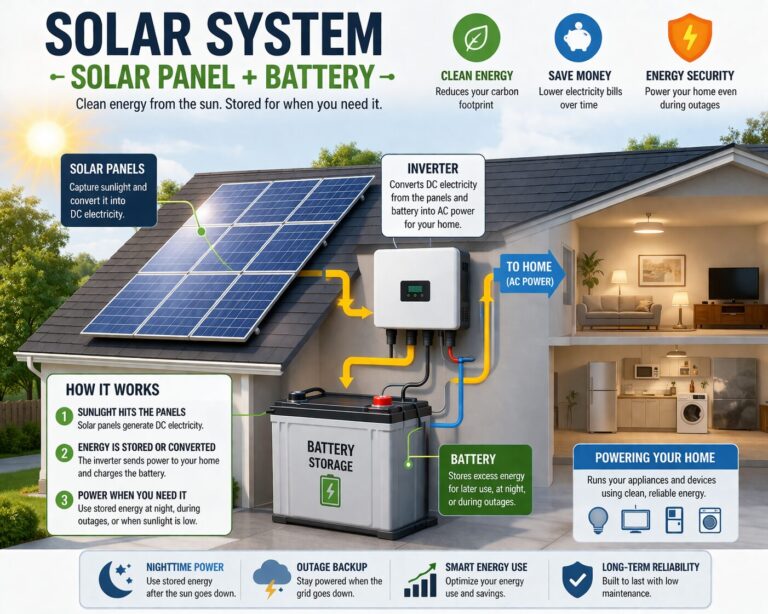
Correct sizing ensures your solar system meets your power needs without waste
Proper solar system sizing is the foundation of a successful installation. An undersized system won’t power your essential loads, leaving you frustrated and still dependent on the grid or generator. An oversized system wastes money on components you don’t need, extending your payback period unnecessarily.
👉 START HERE: Before sizing your solar system, ensure you understand your power needs. Read our Complete Generator Sizing Guide for power calculation basics—the principles are similar.
📊 NIGERIAN REALITY: Most Nigerian solar systems are designed for backup power, not full off-grid living. Understanding your priorities (essential loads only vs full home power) dramatically affects system size and cost.
Follow these five steps to determine the right solar system size for your Nigerian home or business:
Start by listing all the appliances you want to power with your solar system. Be realistic—you don’t need to power everything simultaneously. Focus on essential loads first.
| Appliance | Power (Watts) | Hours/Day | Daily Energy (Wh) |
|---|---|---|---|
| LED Lighting (10 bulbs) | 100W | 8 | 800 Wh |
| Ceiling Fans (4 units) | 240W | 12 | 2,880 Wh |
| Refrigerator (200L) | 150W (running) | 24 (50% duty cycle) | 1,800 Wh |
| TV (55-inch LED) | 100W | 6 | 600 Wh |
| Laptop/Computer | 100W | 6 | 600 Wh |
| Water Pump (0.5HP) | 400W | 2 | 800 Wh |
| 1.5HP Inverter AC | 1,200W | 8 | 9,600 Wh |
| Microwave | 1,200W | 0.5 | 600 Wh |
| Phone/Device Chargers | 50W | 4 | 200 Wh |
| TOTAL DAILY ENERGY | 17,880 Wh (17.9 kWh) |
For accurate sizing, use this formula:
Daily Energy (Wh) = Sum of (Appliance Power × Hours of Daily Use × Duty Cycle)
Note: Refrigerators/freezers have a duty cycle of 30-50% (they don’t run continuously).
⚡ PRO TIP: For Nigerian homes, a realistic essential load (lights, fans, fridge, TV, phone charging) is 3-5 kWh per day. Adding AC or water pump increases requirements significantly.

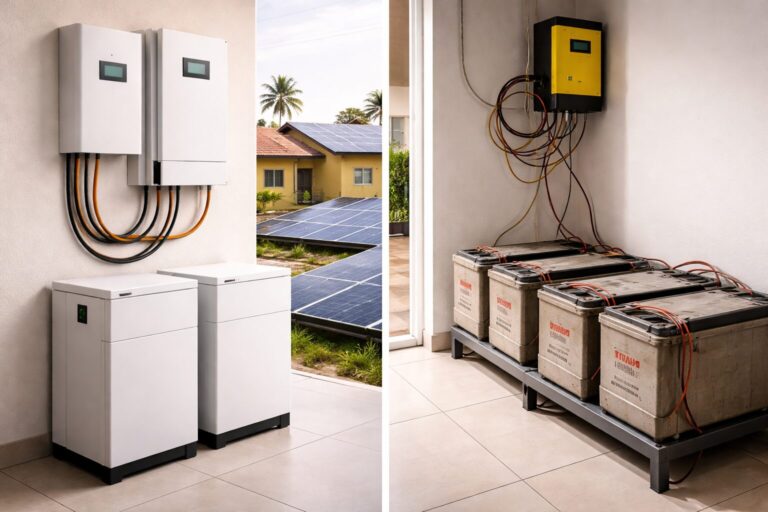
Battery capacity determines how long your solar system powers your home
Your battery bank determines how much energy you can store for use when the sun isn’t shining. Calculate your battery capacity based on how many hours of backup you need.
Battery Capacity (kWh) = Daily Energy (kWh) × Days of Autonomy
Days of autonomy = how many days you want to run without sun (typically 1-2 days for Nigeria)
For Lead Acid Batteries: Multiply by 2 (since only 50% usable)
For Lithium Batteries: Multiply by 1.2 (since 80-100% usable)
🔋 CHOOSING BATTERIES: For detailed battery selection guidance, read our Complete Lithium vs Lead Acid Battery Guide.
Your solar panels need to generate enough energy to power your daily loads AND recharge your batteries. Nigeria’s average daily sunlight hours vary by region.
| Region | Average Peak Sun Hours | Example Locations |
|---|---|---|
| Northern Nigeria | 5.5 – 6.5 hours/day | Kano, Kaduna, Sokoto |
| Central Nigeria | 4.5 – 5.5 hours/day | Abuja, Jos, Benue |
| Southern Nigeria | 3.5 – 4.5 hours/day | Lagos, Port Harcourt, Enugu |
Panel Capacity (W) = (Daily Energy + 20% System Loss) ÷ Peak Sun Hours
20% system loss accounts for inverter efficiency, wiring losses, and battery charge/discharge losses.
☀️ NIGERIAN SUNLIGHT FACT: Southern Nigeria receives fewer sun hours but still has excellent solar potential. Oversize panels slightly to account for cloudy days and Harmattan haze.

Inverter capacity must handle your maximum simultaneous load
Your inverter must handle the maximum power you might draw at any moment. Calculate your total running wattage and add 25% for surge capacity (motors, AC compressors).
Inverter Size (VA/kVA) = (Total Running Watts × 1.25) ÷ Power Factor
Power Factor typically 0.8-0.9. Use 0.8 for conservative sizing.
🔌 INVERTER GUIDE: Read our Complete Solar Inverter Guide for detailed selection advice.
The charge controller manages power from solar panels to batteries. Size it based on your panel array voltage and current.
Controller Amps = Total Panel Watts ÷ Battery Voltage
🔧 COMPLETE SYSTEM SUMMARY (Example 5kWh System):
• Daily Load: 5 kWh
• Battery: 6 kWh Lithium (or 10 kWh Lead Acid)
• Solar Panels: 1,500W (5-6 panels)
• Inverter: 4-5kVA
• Charge Controller: 60-80A MPPT
• Estimated Cost: ₦3,500,000 – ₦5,500,000
| Property Type | What It Powers | Solar Panels | Battery (Lithium) | Inverter | Est. Cost |
|---|---|---|---|---|---|
| 1-2 Bedroom Flat | Lights, fans, TV, phone charging, small fridge | 800-1,200W | 3-4 kWh | 2-3 kVA | ₦1.5M – ₦2.5M |
| 3-Bedroom Flat | Lights, fans, fridge, TV, laptop, water pump | 1,200-1,800W | 5-7 kWh | 3-4 kVA | ₦2.5M – ₦4M |
| 4-5 Bedroom Duplex | Full home: multiple ACs, full kitchen, water pump, home office | 2,000-3,500W | 8-12 kWh | 5-8 kVA | ₦4.5M – ₦8M |
| Large Duplex / Small Business | All appliances, multiple ACs, security, office equipment | 3,500-5,000W | 12-20 kWh | 8-12 kVA | ₦7M – ₦12M |

Choose the right system type based on your grid access and goals
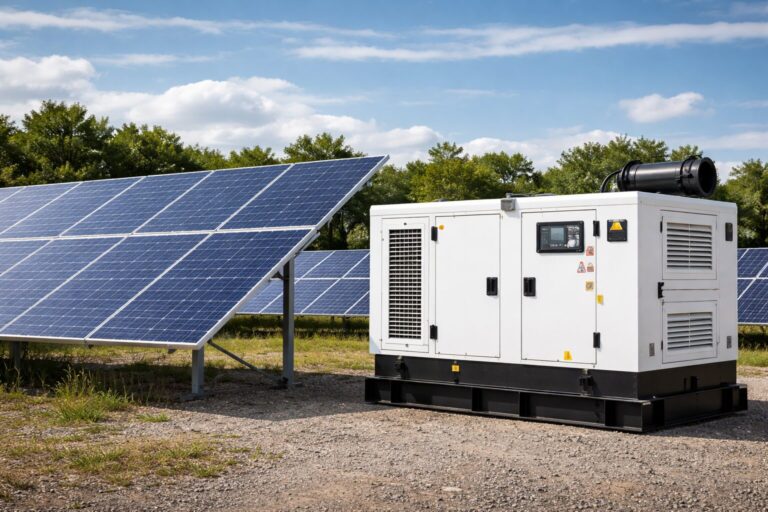
🎯 NIGERIAN RECOMMENDATION: For most Nigerian urban properties, a hybrid solar system with lithium batteries and backup generator is the ideal solution. It provides maximum savings with guaranteed reliability.
Client: Family of 5 with 3 ACs, home office, full kitchen, water pump
Goal: Reduce generator fuel costs while maintaining reliable power
📊 THE RESULT: This Lekki homeowner now saves ₦480,000 monthly on fuel—paying off the solar system in 18 months and saving over ₦57 million in 10 years. Get your free solar sizing today →
💡 EXPERT TIP: Always add 20-30% buffer to your calculations. Nigerian conditions—cloud cover, Harmattan dust, panel degradation—mean actual output is lower than rated.
🌍 Are you a Nigerian living abroad, installing solar on your Nigerian property? Proper sizing is even more critical—you won’t be on-site to adjust or upgrade later.
“I’m in the UK and own a property in Abuja. Titanium Power sized and installed a 8kW solar system with lithium batteries remotely. They sent photos and videos throughout. My tenants now have reliable power, and my fuel costs dropped by 80%. Worth every naira!”
— Dr. Okonkwo, London (Property in Abuja)
🌍 DIASPORA SOLAR SOLUTIONS: Get a free remote solar sizing consultation → We handle everything while you’re abroad.
| Component | Specifications | Cost Range | Notes |
|---|---|---|---|
| Solar Panels | 400W monocrystalline | ₦80,000 – ₦120,000 per panel | Tier-1 brands: Jinko, Canadian Solar, LONGi |
| Lithium Battery | 5kWh LiFePO4 | ₦1,200,000 – ₦2,000,000 | Felicity, Pylontech, BYD |
| Hybrid Inverter | 5kVA | ₦800,000 – ₦1,500,000 | Deye, Growatt, Victron |
| MPPT Charge Controller | 60A | ₦150,000 – ₦350,000 | Victron, Epever, Outback |
| Mounting Structure | Roof or ground mount | ₦100,000 – ₦300,000 | Aluminum or galvanized steel |
| Installation & Wiring | Complete installation | ₦300,000 – ₦800,000 | Includes cables, breakers, labor |
| Monitoring System | WiFi/4G remote monitoring | ₦50,000 – ₦150,000 | Optional but recommended |
Get a free professional solar system sizing for your Nigerian home or business